
Imparfait
& Unique


Patina - Process
Patina reveals the living nature of metal.
It is neither a paint nor a simple colour effect. It emerges from a chemical transformation of the surface: copper and brass react to heat, air, humidity and various oxidising agents.
Everything begins with bare metal.

The surface is prepared and cleaned, sometimes abraded or heated to alter its reactivity.
Then come the successive applications, in thin layers or as deposits. Depending on the desired reaction, the oxides develop slowly or almost instantly.

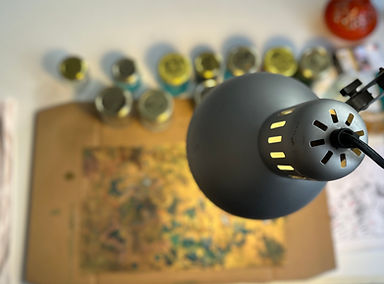

Blues, greens, blacks, browns and reds emerge. They overlap, migrate and sometimes crystallise. Some reactions are stopped, while others are reactivated.


Areas are removed, revealed, or stripped back to expose the metal’s original colour once again.
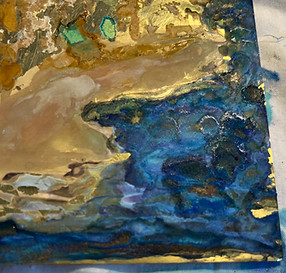
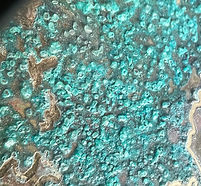

The process therefore unfolds in cycles: oxidise, observe, intervene, wait, begin again.
A large part of the work lies in observing what is actually happening rather than imposing a preconceived image.
One detail calls for a gesture; one reaction leads to another.
There is an element of control — in the choice of products, temperatures, exposure times, or the way a reaction is interrupted — but it can never be absolute.


It is about accompanying what emerges.
Once the desired balance has been reached, the reaction is stopped and the surface is stabilised in order to preserve, as far as possible, this particular state of the material.

Each piece thus retains the trace of this dialogue between chemistry and gesture, intention and accident, control and letting go.